

Why Elderberries Deserve a Spot in Your Wild Pantry
Tucked within tangled thickets and sun-drenched clearings, elderberries are more than just pretty purple clusters—they’re functional food with ancient roots. These inky gems are brimming with bioactive compounds, packed with vitamin C, and revered for their immune-boosting powers. For foragers, herbalists, and wild-food enthusiasts, elderberries bridge the gap between culinary delight and botanical medicine.
Adding elderberries to your pantry isn’t just a nod to tradition—it’s a delicious act of self-reliance. Whether transformed into syrup, jam, or a cordial, they bring the wild indoors, one spoonful at a time.
When and Where to Forage: Timing Is Everything
Elderberry foraging is a seasonal rite that requires attunement to nature’s subtle cues. In most temperate regions, their season arrives in late summer and lingers into early autumn, typically from July to September. Here in Central Florida, by mid-June, we’ll be beginning to harvest deep purple berries.
You’ll find elderberries in the liminal spaces of the landscape. They flourish along fence lines, ditches, woodland margins, and stream banks. Elder shrubs love full sun and moist, well-drained soils, often thriving in disturbed ground. Seek out the older, gnarled bushes—they tend to bear the richest fruit.
Fresh, Frozen, or Dried
When crafting potent and flavorful elderberry syrup, choosing between fresh, frozen, or dried elderberries depends on availability, convenience, and desired potency. Each form offers unique advantages, and understanding the subtle differences can help elevate your syrup-making game.
Fresh elderberries are ideal when in season. Their vibrant flavor and full-spectrum nutrients offer an unbeatable richness. However, they are highly perishable and require immediate use or preservation. Harvesters must also take care to remove all stems, as they can be mildly toxic.
Frozen elderberries come in as the perfect middle ground. Flash-frozen at peak ripeness, they retain much of the nutritional profile of fresh berries while offering convenience and extended shelf life. They’re also easier to de-stem once frozen, making prep smoother.
Dried elderberries are the most shelf-stable option, favored by herbalists and home apothecaries for year-round use. Though slightly more concentrated in flavor, dried berries need to be rehydrated before cooking and may require longer simmering to extract their medicinal properties fully.
Ultimately, there’s no wrong choice—only what suits your needs and rhythm. Whether fresh, frozen, or dried, elderberries remain the cornerstone of a timeless, immune-boosting remedy.
If you plan to forage wild elderberries, check out this post on Foraging Wild Elderberries.
Elderberry: A Natural Remedy for Colds and Flu
For centuries, elderberries have been the secret weapon in traditional apothecaries. Rich in anthocyanins, flavonoids, and antioxidants, these berries help stimulate the immune response and shorten the duration of cold and flu symptoms.
Modern research backs the folklore—elderberry extracts have been shown to inhibit viral replication, reduce inflammation, and even improve respiratory health. They’re the natural world’s answer to the pharmacy aisle.

Benefits of Elderberry
– Immune Support: Regular consumption can strengthen immune defense, especially during flu season.
– Anti-Inflammatory Properties: Flavonoids and polyphenols help calm internal inflammation.
– Antiviral Action: Elderberries have demonstrated potential to block virus entry into cells.
– Rich in Nutrients: A source of vitamin A, C, potassium, and iron, elderberries nourish the body while fighting illness.
– Digestive Health: Their gentle laxative effect can support regularity and gut well-being.
How Long Does Homemade Elderberry Syrup Last?
The short answer is that it depends. Putting the finished syrup in a mason jar with a metal canning lid while it’s warm creates an airtight seal. This allows it to last much longer in the fridge, up to several months (if unopened). As a general rule, it lasts about two to three weeks in the fridge. I usually freeze whatever I won’t use during that time. You can freeze some in an ice-cube tray and defrost small amounts when needed.
This post contains affiliate links, which means I make a small commission at no extra cost to you

Elderberry Syrup Recipe with Raw Honey
Ingredients:
– 1 cup fresh or ½ cup dried elderberries
– 3 cups water
– 1 cinnamon stick or 1 tsp ground cinnamon
– 3 cloves or 1/2 tsp ground cloves
– 1-inch knob fresh ginger (sliced) or 2 tsp ground ginger
– 1 cup raw honey
Instructions:
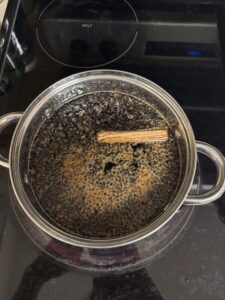
- In a medium saucepan, combine elderberries, water, cinnamon, cloves, and ginger.
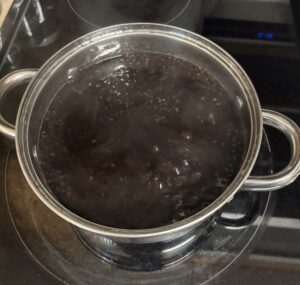
- Bring to a boil, then reduce to a simmer. Let it bubble gently for 30–40 minutes, or until reduced by nearly half.
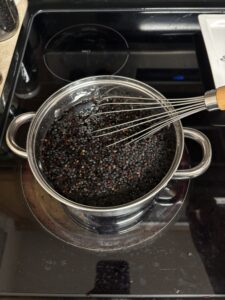
- Mash the berries gently with a wooden spoon.
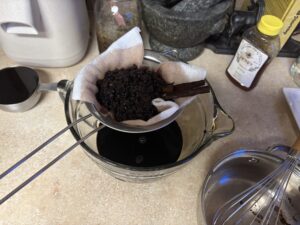
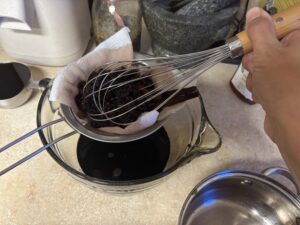
- Strain the mixture through cheesecloth or a fine mesh strainer into a clean bowl.
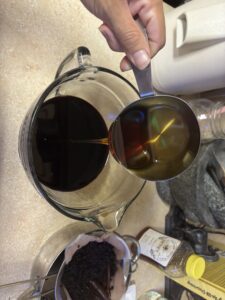
- Let it cool until just warm, then stir in the raw honey.
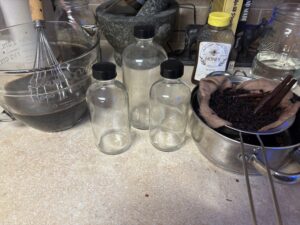
- Pour into a sterilized glass jar and refrigerate.

Dosage: Take 1 tablespoon daily for adults or 1 teaspoon for children. At the first sign of illness, you can increase to every few hours.
I am an Amazon Associate, which means I earn a commission from qualifying purchases when you click one of these links and purchase something, at no extra cost to you.
In every glimmering drop of elderberry syrup lies the wisdom of the wild. From forest edge to kitchen counter, these tiny berries carry with them not just nutrients, but stories, seasons, and the slow rhythm of a life lived close to the land.
Discover more from Wildflower Family Farm
Subscribe to get the latest posts sent to your email.

Homemade Elderberry Syrup Recipe for Immune Boosting Wellness
Description
Simmered elderberries with cinnamon, cloves, ginger, and raw honey to create a deeply nourishing syrup
Ingredients
Instructions
-
In a medium saucepan, combine elderberries, water, cinnamon, cloves, and ginger.
-
Bring to a boil, then reduce to a simmer. Let it bubble gently for 30–40 minutes, or until reduced by nearly half.
-
Mash the berries gently with a wooden spoon.
-
Strain the mixture through cheesecloth or a fine mesh strainer into a clean bowl.
-
Let it cool until just warm, then stir in the raw honey.
-
Pour into a sterilized glass jar and refrigerate.
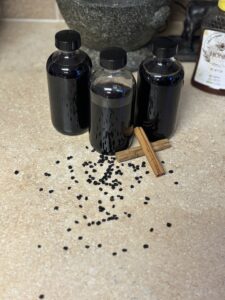
Store in an air-tight container, like a mason jar, for 2 to 3 weeks or freeze for 6 to 8 months.
Nutrition Facts
Servings 80
- Amount Per Serving
- Calories 14kcal
- % Daily Value *
- Total Fat 0.01g1%
- Sodium 0.76mg1%
- Total Carbohydrate 3g1%
- Sugars 3g
- Protein 0.03g1%
- Vitamin A 7 IU
- Vitamin C 0.5 mg
- Calcium 1 mg
- Iron 0.04 mg
- Manganese 0.03 mg
* Percent Daily Values are based on a 2,000 calorie diet. Your daily value may be higher or lower depending on your calorie needs.
